About First They Killed My Father
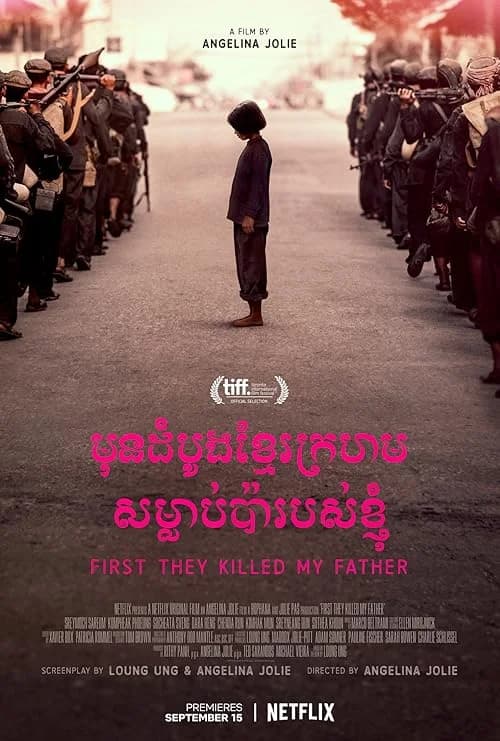
First They Killed My Father (2017) is a harrowing and deeply personal biographical drama that brings to life Loung Ung's memoir of survival under the Khmer Rouge regime in Cambodia. Directed by Angelina Jolie in collaboration with Ung herself, the film offers a child's-eye view of one of history's most brutal genocides, following young Loung as her family is torn from their Phnom Penh home and forced into labor camps.
The film's power lies in its intimate perspective, with newcomer Sareum Srey Moch delivering a remarkably authentic performance as Loung. Jolie's direction is restrained yet emotionally potent, capturing both the sweeping tragedy and small moments of human resilience. Shot entirely in Cambodia with a local cast speaking Khmer, the film achieves an extraordinary level of authenticity that transports viewers directly into this devastating historical moment.
What makes First They Killed My Father essential viewing is its ability to convey profound historical trauma through personal experience rather than political exposition. The cinematography beautifully contrasts Cambodia's landscapes with the horror unfolding within them, while the minimal use of dialogue enhances the emotional impact. This isn't just a historical document but a universal story about family, survival, and memory. For those seeking a film that educates while it moves, that honors victims without sensationalism, and that demonstrates cinema's power to preserve crucial histories, this Netflix production represents some of Jolie's most important work as a filmmaker.
The film's power lies in its intimate perspective, with newcomer Sareum Srey Moch delivering a remarkably authentic performance as Loung. Jolie's direction is restrained yet emotionally potent, capturing both the sweeping tragedy and small moments of human resilience. Shot entirely in Cambodia with a local cast speaking Khmer, the film achieves an extraordinary level of authenticity that transports viewers directly into this devastating historical moment.
What makes First They Killed My Father essential viewing is its ability to convey profound historical trauma through personal experience rather than political exposition. The cinematography beautifully contrasts Cambodia's landscapes with the horror unfolding within them, while the minimal use of dialogue enhances the emotional impact. This isn't just a historical document but a universal story about family, survival, and memory. For those seeking a film that educates while it moves, that honors victims without sensationalism, and that demonstrates cinema's power to preserve crucial histories, this Netflix production represents some of Jolie's most important work as a filmmaker.